
The most complete beach lifestyle suburb in Wollongong. Commands a premium that reflects it.
North Wollongong sits immediately north of the CBD, running from the edge of the city's commercial centre up toward Fairy Meadow. It occupies a narrow coastal strip with North Beach on the eastern boundary and the Princes Highway corridor to the west. Making it one of the more compact and intensively used residential suburbs in the region.
The suburb attracts buyers who want to be close to Wollongong CBD, the beach, and the university precinct without paying the premium of the northern suburbs. It's a mix of renters, owner-occupiers, and investors, reflecting its position near the University of Wollongong campus and its relatively accessible price point compared to nearby Wollongong or Fairy Meadow.
The trade-off is density and noise. North Wollongong is not a quiet suburban escape. The Princes Highway runs through the western edge, rail lines are in the vicinity, and the university's proximity generates a steady transient population. Buyers looking for a village feel or low-density residential experience may find it doesn't match that brief.

Who Lives Here?
Young professionals, surfers, couples, lifestyle buyers
North Wollongong's primary asset is its position. Walkable to both North Beach and Wollongong CBD. The foreshore walking and cycling path connecting North Beach to the CBD is well used and gives the suburb a connected, active feel. For buyers who want ocean access built into daily life, the address works well.
The suburb's own retail offering is limited. It functions largely as an extension of Wollongong CBD for shops, dining and services. The short walk or cycle into the CBD makes this less of an issue than it might be in a more isolated suburb, but buyers expecting a local village strip will need to look elsewhere.
Families exist in the suburb but it's not primarily a family-oriented suburb. The school options are more limited locally, and the density and urban character make it a different experience to the typical family-focused Illawarra suburb. Buyers with children should check specific school catchments and consider how the suburb's street environment aligns with their family brief.
Transport is a strength. North Wollongong station provides direct rail access to Wollongong CBD in minutes and connects northward toward Sydney. The CBD's bus network is also accessible. For car-dependent buyers, the suburb's positioning close to the highway network makes it efficient, though parking within the suburb itself can be limited.
Feels Like
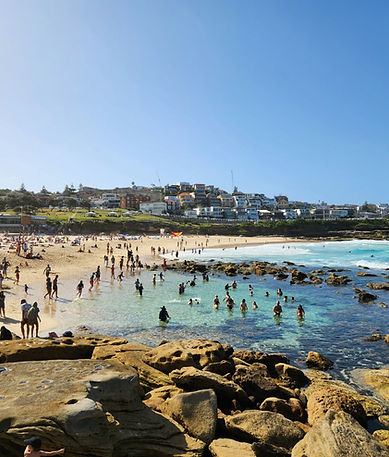
Manly
Beach suburb, coastal walk, young lifestyle energy
Coogee
Coastal path, beach strip, young professionals
Bondi
Young energy, beach at the door, city lifestyle
Freshwater
Beach suburb, away from the main strip
Bronte
Compact beach suburb, young professionals, coastal path
What a Weekend looks like
Walk to the beach at 7am before the crowds arrive. Coffee at Diggies or one of the newer cafes on the strip, then the coastal path south toward Stuart Park or north along the rock baths. Saturday afternoon: stay on the sand or head to Wollongong Harbour, five minutes on foot. One of those rare suburbs where you genuinely do not need a car on the weekend. Everything — surf, coffee, the city's restaurants, the escarpment lookout — is within a 20-minute walk.
Is it right for you?
Who tends to suit North Wollongong
Buyers who want to walk to the beach and to Wollongong CBD without a car will find North Wollongong one of the few Illawarra addresses where that's genuinely possible. The walkability to North Beach, the CBD retail strip, and the foreshore walking track gives it a convenience that most Illawarra suburbs can't offer.
Investors targeting the university rental market have been active in North Wollongong for many years. Proximity to the UOW campus and the relative accessibility of apartment stock make it a considered choice for that purpose, though rental yield expectations should be calibrated against current conditions rather than historical assumptions.
Buyers downsizing from a family home who want to stay close to the city and retain beach access, but no longer need a large house, often find the suburb's unit stock a reasonable fit. The trade-off is accepting a denser, more active street environment.
Who may find it a compromise
- Buyers wanting a quiet, low-density street environment. North Wollongong has traffic, university activity and highway noise that make it more urban than most Illawarra suburbs.
- Families seeking large backyards. The housing stock leans toward units and smaller homes; large family blocks are not what this suburb offers.
- Buyers expecting strong price growth divorced from the unit market. The suburb's investor exposure and university orientation mean its pricing dynamics differ from owner-occupier-led suburbs.
- Buyers expecting privacy and green streetscape. This is a compact, built-up suburb close to the city.
Property Profile
North Wollongong is more unit-heavy than most Illawarra suburbs. Apartment buildings from the 1960s through to more recent developments sit alongside a smaller number of detached homes and townhouses. The unit stock varies considerably. From older brick walk-up buildings with smaller floorplans to more recent developments with better fitout and facilities.
Houses in North Wollongong tend to be modest post-war homes on smaller-than-average blocks. They attract strong interest from owner-occupiers who want to be close to the beach and city without entering the strata market. When well-located houses come to market. Particularly on the quieter eastern streets. They can attract competition quickly.
The investment-heavy composition of some building types means buyers should look carefully at owner-occupier ratios within strata schemes. A building with a high proportion of investor-owned units may have different maintenance culture and strata engagement than one with a strong owner-occupier base.
Rental demand from the university market has historically supported investor returns in the suburb, though vacancy rates and yield can fluctuate with enrollment cycles and purpose-built student accommodation development nearby.
What Buyers Should Know
University of Wollongong proximity
The UOW campus is on the western edge of the suburb. This proximity drives rental demand and investor activity, which affects the composition of the market. Buyers purchasing for owner-occupation should be aware that some strata buildings in the suburb have high investor ratios, which can affect strata management quality and owner-occupier experience.
Highway and rail noise
The Princes Highway runs along the western edge of the suburb and the South Coast rail line is nearby. Properties on or close to these corridors can experience significant noise. A quiet weekend inspection will not give an accurate picture. Visiting at peak hour or on a weekday is worthwhile for any property near these corridors.
Strata quality variation
North Wollongong's unit stock ranges considerably in strata quality and building condition. Older apartment buildings from the 1960s to 1980s can carry significant deferred maintenance, and some have had strata levy issues over the years. Reviewing strata records. Including the AGM minutes, special levy history, and building management. Is critical before purchasing any unit in the suburb.
Beach proximity and street variation
Streets east of the highway and closer to the beach carry a noticeable premium. The difference between a property two streets from the beach and one backing onto the highway corridor is significant. In both liveability and price. North Beach itself is a patrolled beach with good facilities, and proximity to it is a real value driver.
Parking and density
Street parking is more constrained in North Wollongong than in lower-density suburbs. For unit purchases, confirming secure parking allocation is important. Some older buildings were constructed before off-street parking was a standard requirement.
Why Use a Buyers Agent
North Wollongong's strata-heavy market and its dual profile as both an owner-occupier and investment suburb create real complexity for buyers who aren't familiar with the local building quality, strata histories and investment-to-owner ratios across the suburb's various buildings and streets.
- Strata record review. Identifying buildings with healthy financials, good maintenance history and sensible levy structures versus those carrying deferred problems.
- Noise and amenity assessment. Mapping highway and rail exposure so buyers understand which streets and orientations genuinely deliver the beach experience they're paying for.
- Investment-to-owner ratio analysis. Flagging buildings where a high investor concentration may affect liveability and strata governance for owner-occupiers.
- Price context. Understanding what a genuine beach-side address trades for versus a highway-adjacent property being marketed on suburb name alone.
- Off-market access. Some of the better-positioned properties in this suburb transact quietly; local agent relationships improve access.
Buying beyond North Wollongong? See how our independent buyers agent service across the Illawarra works, from brief to settlement.
