
Moving from the Inner West to the Illawarra: The Complete Guide
If you live in Newtown, Marrickville, Balmain or one of the streets in between, you already know the trade-off you're weighing up. You love the walkability, the coffee, the terraces, the fact that everything is five minutes away.
What you don't love is paying $1.9 to $2.1 million for a house that still needs a new roof, or watching a two-bedroom unit clear $1 million at auction because six other buyers wanted it.
The Illawarra is where a meaningful number of Inner West buyers are ending up, and it's not because they're settling for less. It's because Wollongong's CBD fringe, Keiraville and Gwynneville offer something close to the same daily rhythm, walkable, café-dense, university-adjacent, at a price and a pace that actually works.
This guide covers why Inner West buyers are looking south, what genuinely changes when you move, where they tend to land, and who this move suits (and who it doesn't). It's part of our wider Sydney to the Illawarra relocation series; if you're not sure the Illawarra is the right fit, or you want to see how your own suburb compares, start with our Suburb Twin Matcher.

Why Inner West buyers are looking south
The numbers explain most of it. In Newtown, the median house price sits at $1.9 million, and it's a competitive market: the auction clearance rate is running above 77%, with homes selling in a median of 24 days. Marrickville is tighter again, with a $2.13 million house median and a 74% clearance rate.
These aren't soft markets buyers can wait out. They're markets where the good stock moves fast, and the leftovers are compromised (main roads, tiny blocks, no parking).
Renting isn't the release valve it once was either. Median asking rent for a house in Newtown is now $1,020 a week, and $1,050 a week in Marrickville. For a lot of Inner West households, the maths has stopped making sense either way, buying or renting.
None of this means the Inner West is a bad place to live. It means the price of staying has become very high, and more buyers are asking whether a similar lifestyle exists somewhere they can actually afford to own.
What changes when you make the move
Commute. This is the honest trade-off, and it's worth saying plainly: Wollongong is roughly 80 to 90 minutes from Sydney's CBD by train, longer than most Inner West commutes.
This move suits people who don't need to be in the Sydney CBD five days a week, whether that's hybrid work, a Wollongong-based role, or a job that's already flexible. If you need daily CBD attendance, be realistic about what that commute costs you in time before you commit.
Density and pace. Wollongong's city centre has grown up fast over the past decade, more apartments, a genuine café and bar strip, a university a few minutes' drive or a short bus ride away. It's denser and busier than most of the northern Illawarra's beach suburbs, which is exactly why it suits Inner West buyers better than, say, Thirroul or Austinmer would. You're not trading urban energy for quiet; you're trading Sydney-scale urban energy for a smaller, more manageable version.
Schools and healthcare. Wollongong has full public hospital services (Wollongong Hospital) and a widespread network of public and Catholic schools, plus the University of Wollongong itself, which shapes both Keiraville and Gwynneville's rental and buyer demand. If your household includes university-age kids or you work in health or education, this is a genuine drawcard, not a compromise.
Weekends. You keep a walkable café strip. You gain the escarpment, a short drive to beaches at North Wollongong and Coniston, and considerably more outdoor space per dollar than the Inner West offers. What you lose is the sheer density of choice, the dozen restaurants on one strip. What you gain is that most of what you need is a five to ten minute walk or drive, without an hour of traffic to get there.
Where Inner West buyers tend to land
Three pockets do most of the work here, and each suits a slightly different buyer.
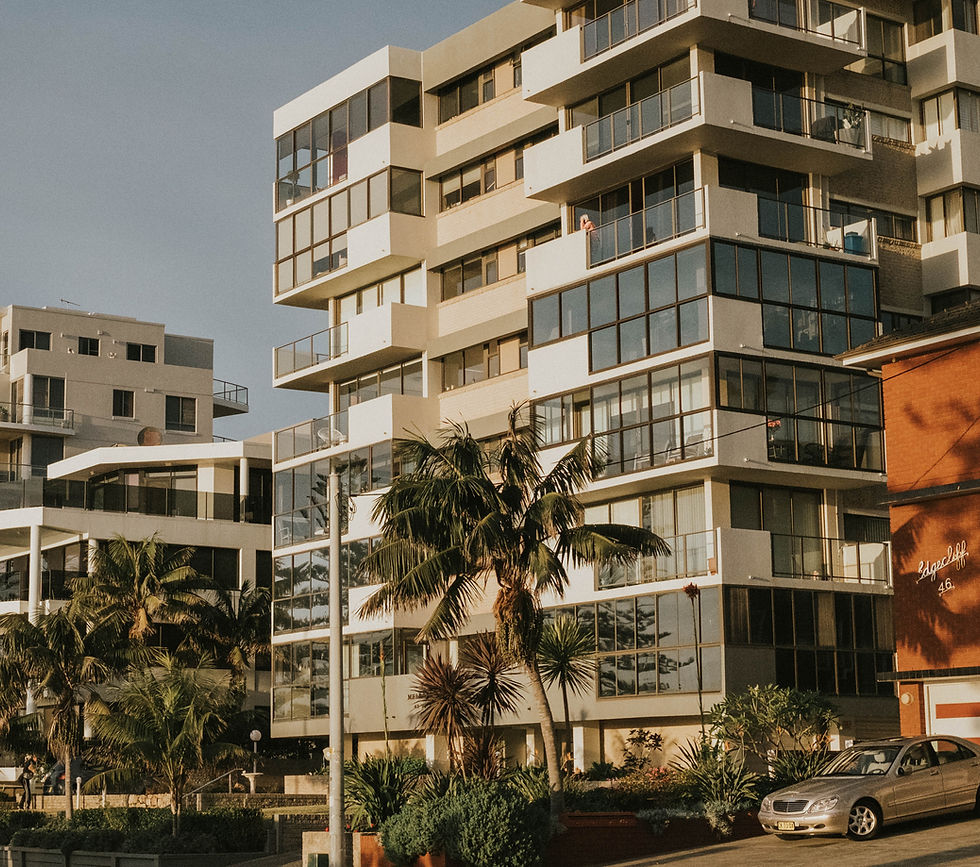
Wollongong (CBD and fringe) suits buyers who want the closest match to inner-city apartment or terrace living: walk to cafés, walk to the harbour, a short walk or drive to the university. House median $1,200,000, up 9.1% over the past year on 71 recorded sales, with a median of 31 days on market. Units are the more common buy here (429 sales this period), median $750,000, up 5.6%.
Keiraville suits families and academics wanting a proper house within walking distance of the University of Wollongong, on quieter, leafier streets than the CBD. House median $1,292,500, up 3.5% over the past year on 52 sales, median 33 days on market. Unit stock here is genuinely thin (only 2 sales recorded this period), so if you're looking at units specifically, treat any price you're quoted as a one-off rather than a market figure.
Gwynneville sits between the CBD and the university, and suits buyers who want walkability to both without paying full CBD prices. House median $1,306,600, essentially flat over the past year (down 1.0%) on 24 sales, median 30 days on market. Units here have moved more, median $631,000, up 14.7%, though on a sample of 13 sales it's still worth confirming against a fresh appraisal rather than treating that growth figure as gospel.
Price comparison: what an Inner West budget buys
Suburb | Median house price | 12-month change | Days on market | Median asking rent (house) |
|---|---|---|---|---|
Newtown (origin) | $1,900,000 | -2.6% | 24 | $1,020/wk |
Marrickville (origin) | $2,130,000 | 0% | 26 | $1,050/wk |
Wollongong (CBD/fringe) | $1,200,000 | +9.1% | 31 | $770/wk |
Keiraville | $1,292,500 | +3.5% | 33 | $832/wk |
Gwynneville | $1,306,600 | -1.0% | 30 | $790/wk |
Figures via Stash Property, 12 months to Aug 2026.
Even at the top of this range, Gwynneville and Keiraville sit $600,000 to $800,000 below a Marrickville house median, for a genuinely walkable, café-and-university-adjacent lifestyle rather than a compromise suburb.
The process, in practical terms
Moving from the Inner West is logistically simpler than it looks, but the mistakes are predictable. Buyers who've never lived outside inner Sydney tend to underestimate how differently the Illawarra market runs: fewer auctions, more private treaty negotiation, and a real premium for walkability to the university and CBD (the exact opposite of what buyers expect once they've left the Sydney auction system behind).
A short, sensible sequence: get clear on your commute tolerance before you shortlist suburbs, not after; visit on both a weekday and a weekend, since Wollongong's CBD in particular feels very different depending on when you're there; and treat any quoted "unit median" for Keiraville or Gwynneville with real scepticism given how few sales those markets see.
Who this move suits, and who should think twice
This move suits Inner West buyers who work hybrid or Wollongong-based roles, who value walkability and café culture more than beach lifestyle, and who have university, health or education ties to the area.
It also suits buyers who've already priced themselves out of a Newtown or Marrickville house and are deciding between renting indefinitely and buying somewhere that still delivers a similar daily rhythm.
It doesn't suit buyers who need to be physically in the Sydney CBD five days a week without exception. Be honest with yourself about that commute before you fall in love with a Keiraville terrace.
Buyer takeaway
If you're comparing an Inner West budget against the Illawarra, don't shortlist by price alone. Shortlist by walkability radius first (café strip, university, transport), then compare prices within that radius. Wollongong CBD, Keiraville and Gwynneville each deliver a different version of "inner-city adjacent", and picking the wrong one for your daily habits is a bigger mistake than paying slightly more for the right one.
If you want a second opinion on which of these three actually matches how you live day to day, not just what looks good on paper, talk to us about your relocation brief.
Coming from a different part of Sydney instead? We've covered the same ground for Sydney's Eastern Suburbs and the Sutherland Shire, since the numbers and the trade-offs differ by origin.
Frequently asked questions
How long is the commute from Wollongong to Sydney if I'm coming from the Inner West? Budget 80 to 90 minutes door to door by train from Wollongong to Sydney's CBD, longer from Keiraville or Gwynneville once you add the drive or bus to the station. It's a genuine step up from an Inner West commute, so this move suits hybrid or flexible work better than a five-day CBD role.
See our honest answer on commuting from Wollongong to Sydney for the full breakdown.
Is Wollongong cheaper than the Inner West? Yes, materially. Wollongong's house median is around $1.2 million against Marrickville's $2.13 million and Newtown's $1.9 million, roughly $700,000 to $900,000 less for a similar-feeling walkable lifestyle. Keiraville and Gwynneville sit a little higher than the CBD but still well below either Inner West suburb.
Will I still get the same café culture in Wollongong, Keiraville or Gwynneville? Wollongong's CBD has built a genuine café and bar strip over the past decade, smaller than Newtown's but real. Keiraville and Gwynneville are quieter, more residential, and closer to the university than to a café strip, so they suit buyers who want walkability more than they want a dozen restaurant options on one street.
Do I need a car if I move from the Inner West to Wollongong? In the CBD, less than you'd think, most day-to-day needs are walkable. In Keiraville and Gwynneville, a car (or a reliable bus route to the university and CBD) makes life considerably easier, since they're residential pockets rather than commercial strips.


Comments